Kickboxing na Psycho Team: O Benefício Surpreendente
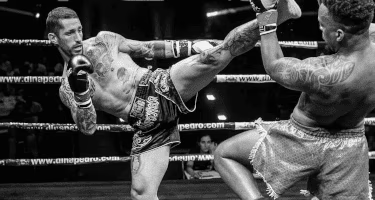
Muita gente espera que o Kickboxing só aumente força e cardio. O que surpreende é como ele melhora a tomada de decisão quando o coração acelera. Na nossa área de 310m² no centro de Setúbal, vemos iniciantes ganharem calma, precisão e leitura de distância à medida que praticam Kickboxing de forma estruturada.
Benefícios Físicos e Mentais do Kickboxing
- Capacidade cardiovascular: rondas intervaladas elevam o VO2 e ensinam gestão de intensidade.
- Força e potência: drive de anca e base estável para socos e pontapés mais pesados.
- Mobilidade e postura: abertura de anca e rotação torácica combatem o sedentarismo.
- Coordenação e timing: combinações, pés e defesa trazem fluidez ao Kickboxing.
- Resiliência e gestão de stress: bater em pads alivia; rondas estruturadas criam autocontrolo.
Exercícios e Técnicas Essenciais
- Base e guarda: largura dos ombros, queixo baixo, cotovelos juntos; 2–3 min de sombra focando equilíbrio.
- Sequências com jab: 1, 1–2, 1–2–3 com saída. No Kickboxing o jab dita distância e ritmo.
- Chute circular: pivotar no pé da frente, chicote da anca, canela no alvo, mão oposta a proteger.
- Teep para medir distância: usar, sair da linha central e contra-atacar.
- Camadas defensivas: slip no jab, roll no hook, check às low kicks e resposta 2–3–2.
Nutrição para Atletas de Kickboxing
- Antes (2–3 h): proteína magra, hidratos lentos, legumes e água com uma pitada de sal.
- Antes (30–60 min): fruta ou iogurte; bebida de carboidratos em treinos em jejum.
- Durante: água/eletrólitos; em >60 min intensos de Kickboxing, 20–40g de carbs/h.
- Após (0–2 h): 25–40g proteína, 0.5–1g/kg de carbs e vegetais coloridos.
- Diariamente: 1.6–2.2 g/kg proteína, 25–35g fibra e 7–9h de sono.
Prevenção de Lesões e Consistência
- Aumente o volume aos poucos: mais 1 ronda/semana até 6–8 no total.
- Aquecimento intencional: mobilidade com respiração e sombra progressiva.
- Técnica antes da potência: reduza intensidade, ajuste ângulos e postura, depois acelere.
- Rode intensidades: dias duros, moderados e técnicos mantêm o Kickboxing sustentável.
- Proteções: caneleiras no início, mãos bem enfaixadas; fortaleça punhos e tornozelos.
Treino de 45–60 Min de Kickboxing
- Preparação: respiração, mobilidade de anca/tornozelo e sombra leve.
- Habilidade: escada de jab, saídas e tempo do teep.
- Pads/Saco: 3–6 x 2–3 min alternando rounds só de boxe e com chutes.
- Final: EMOM com chutes fortes + diretos no saco; recuperação ativa.
- Volta à calma: respiração nasal e mobilidade.
Pronto para evoluir em Kickboxing num ambiente profissional em Setúbal? Inscreva-se numa aula: https://psyteam.pt/checkin
Kickboxing at Psycho Team: The Surprising Advantage You’re Missing
Most people expect Kickboxing to build power and stamina—but the hidden advantage is how it sharpens decision-making under fatigue. In our 310m² training space in the heart of Setúbal, I’ve watched new members go from hesitant to precise as they learn to stay calm, read distance, and choose the right strike in real time. That’s the essence of Kickboxing: not just movement, but intelligent movement.
The Physical and Mental Benefits of Kickboxing
The body adapts quickly to specific demands. Kickboxing blends aerobic and anaerobic conditioning, improving your ability to repeat high-effort bursts without gassing out. Just as importantly, it trains your brain to stay focused when the heart rate is high.
- Cardiovascular capacity: Interval-heavy pad rounds in Kickboxing raise VO2 max while teaching output control.
- Strength and power: Rotational hip drive, bracing, and ground force through the feet make your cross and roundhouse land harder.
- Mobility and posture: Stance work, hip opening, and thoracic rotation reduce desk-driven stiffness.
- Coordination and timing: Combinations, footwork, and defensive layers build fluidity, not just force.
- Stress relief and resilience: Hitting pads is cathartic; structured Kickboxing rounds teach emotional regulation under pressure.
Mentally, Kickboxing builds pattern recognition and confidence. You become comfortable with controlled discomfort—a skill that spills into life and work.
Essential Training Drills and Techniques
Fundamentals win fights and keep training productive. Here are staples we use at Psycho Team to upgrade your Kickboxing, whether you’re a beginner or leveling up:
- Stance and guard calibration: Set a shoulder-width base, slight toe-out on the rear foot, chin tucked, elbows in. Shadowbox 2–3 minutes focusing only on balance.
- Jab-first sequencing: 1, 1–2, 1–2–3 into exit. The jab sets range and tempo in Kickboxing; make it automatic.
- Rear roundhouse mechanics: Pivot on the ball of the lead foot, whip the hip, shin through target, opposite hand guarding. Reset stance without crossing feet.
- Teep to frame distance: Use the lead teep as a “measuring stick,” then step outside the centerline and counter.
- Defensive layers: Slip outside the jab, roll under the hook, check low kicks, then answer with a 2–3–2 or a counter kick.
- Footwork grids: Forward/backward, lateral shuffles, and L-steps. Kickboxing footwork is your insurance policy.
Quality trumps quantity. Ten crisp minutes of focused mechanics in Kickboxing beats thirty minutes of sloppy volume every time.
Nutrition Tips for Kickboxing Athletes
Training intensity drives fueling needs. Keep it simple and repeatable so you can stay consistent with Kickboxing sessions:
- Pre-session (2–3 hours): 1–2 palms lean protein, 1–2 fists slow carbs (rice, potatoes), veggies, and water with a pinch of salt.
- Pre-session top-up (30–60 min): A banana, yogurt, or a small carb drink if you train fasted.
- During: Water or electrolytes. For >60 min high-intensity Kickboxing, 20–40g carbs per hour helps maintain output.
- Post-session (0–2 hours): 25–40g protein, 0.5–1g/kg carbs, and colorful plants for antioxidants.
- Daily anchors: 1.6–2.2 g/kg protein, 25–35g fiber, and 6–8 hours between hard Kickboxing days for recovery.
Supplements that actually help: creatine monohydrate (3–5g/day), beta-alanine (3–6g/day split), vitamin D if deficient, and electrolytes in hot sessions. Everything else is optional.
Tips for Avoiding Injuries and Staying Consistent
Consistency is your superpower in Kickboxing. Here’s how to keep training week after week without setbacks:
- Earn your volume: Add rounds gradually (e.g., +1 round each week up to 6–8 total).
- Warm-up with intent: Breath-led mobility, stance activation, and 3–5 minutes of progressive shadowboxing.
- Technique before power: If a kick or punch feels off, reduce intensity, fix angle and posture, then build speed.
- Rotate intensities: Hard, moderate, and technical days. Your nervous system needs variety to thrive in Kickboxing.
- Shin and wrist care: Use shin guards early, wrap hands meticulously, and strengthen wrists/ankles with light isometrics.
- Sleep like it’s training: 7–9 hours. No recovery, no progress.
Sample 45–60 Minute Kickboxing Session
Try this structure on your next visit to Psycho Team in Setúbal:
- Prep (8–10 min): Box breathing x2 min, hip openers, ankle rocks, thoracic rotations, then light shadowboxing.
- Skill (15–20 min): Jab ladder, jab–cross exits, and teep timing. Film 1–2 rounds to review mechanics of your Kickboxing.
- Pads/Bags (12–18 min): 3–6 x 2–3 min rounds. Alternate boxing-only rounds with kick-inclusive ones.
- Conditioning finisher (6–8 min): EMOM x 6—10 hard kicks each leg + 8–10 hard straights on the bag, then active recovery.
- Cooldown (5 min): Nose-only breathing, calf/hip flexor mobility, wrist circles.
Pro tip: Track your session RPE (1–10). Aim for an average 6–7 across the week to keep Kickboxing progress without burnout.
---
At Psycho Team, we coach real people—not robots—in a spacious 310m² facility designed for purposeful Kickboxing practice. If you’re ready to move better, hit cleaner, and feel sharper, sign up for a class today: https://psyteam.pt/checkin